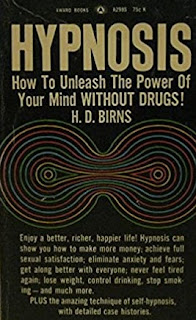
This is a very competent introduction to the subject, with good, basic instructions in self hypnosis. As with most other books of this type, it discusses a bit of the history of hypnosis, common conceptions of hypnosis versus actual facts, and a few "case histories" to illustrate how individuals were affected by the use of hypnosis. At the time of writing this book, Hypnosis was practiced primarily by psychologists, and it was one of the possible treatment modalities that they might apply. One interesting historical note is that hypnosis, he says, became popular after WW2 to assist soldiers when there just weren't enough psychologists to go around, and Freudian Analysis (the common approach at the time) took too long.
The title itself is interesting and timely for the '60s when both psychiatric as well as psychedelic/recreational drugs were a hot topic.
The "payload" of this book is a straightforward, basic method of self-hypnosis that readers can use for themselves to create changes in their own habits. He distinguishes three levels of trance to help experimenters get to the levels that are best suited for the changes they want to make, visualization, and post-hypnotic suggestion.. He includes basic instructions for "glove anesthesia" an hypnotic method for pain control, and entire chapters discussing weight control, smoking, drinking anxiety, and general self-improvement.
Further chapters discuss the spookier, more questionable applications of hypnosis that were particularly hot topics in those Cold War years, including commission of crimes, brainwashing, and subliminal advertising. Hypnotists are generally divided over whether a person can be hypnotized to do things they wouldn't normally do. This author feels that it is possible, and offers cases to back himself up, including legal cases, and the kind of brainwashing done by Nazis and by the Communist Chinese. His discussion about "Subliminal Perception" (subliminal advertising) was also a hot topic at the time, and he has great faith in the power of it. Finally, he touches on hypnosis for ESP, and introduces Charles Richet's term "cryptesthesia" for telepathy, and feels hypnosis can enhance it.
Overall, it's a really good, thorough introduction to the subject with enough practical information on self-hypnosis to get a curious beginner started, but without being overwhelming. He addresses a lot of hot-button issues of the time, which are still timely today, and for all the stories and studies he discusses, he includes the authors and sources, which is often not done.I'm actually surprised I wasn't able to find out more information about the author on line.


 Posts
Posts

